
The best energy saving tips for a Winnipeg winter start at the top of the house. When it’s -30°C outside and the furnace hasn’t had a day off, every gap in the attic shows up on the bill.
Most of that heat doesn’t slip out through the walls. It rises into the attic and escapes through openings nobody can see from the living room. Some of the fixes below cost a tube of caulking and an afternoon. Others make the most sense when you’re already replacing the roof or siding, because that’s when the hard-to-reach parts of the house are easier to access.
Seal the Attic Before You Add Insulation
Warm air rises, and in most Winnipeg homes it finds its way into the attic through gaps around pot lights, bathroom fans, plumbing stacks, and the attic hatch. You’re paying to heat that air, and it’s leaving.
It causes a second problem too. When warm, humid air reaches the cold underside of the roof, it condenses and freezes. On the first mild day, that frost melts, soaks the insulation, and can turn up as a water stain on the ceiling that looks a lot like a roof leak.
Seal those gaps before anyone adds insulation. Insulation slows heat down, but air moves right through it. Caulking and spray foam handle most small openings. Gaps around chimneys and some light fixtures need fire-rated materials, so leave those to a professional.
Top Up Attic Insulation to R-50
R-value measures how well insulation resists heat. Manitoba Hydro’s energy efficiency loan requires attics to reach R-50, which is a solid target for a conventional Winnipeg attic. Plenty of older homes in the city sit well below it.
You don’t have to rip out what’s already there. Dry insulation in good shape can stay, with new insulation blown in on top. The one thing to protect is the row of soffit vents along the eaves. Insulation packed against them cuts off the outside air the attic needs to stay dry.
An insulation contractor handles this work. If a roof replacement is on the horizon too, plan the two together, since the roofer will be looking at your attic ventilation anyway.
Read Your Roof After a Snowfall
One of the best energy saving tips for a Winnipeg home costs nothing. After a fresh snowfall, wait for an overcast day and compare your roof to the neighbours’. If yours clears first, or shows bare patches while theirs is still white, heat is escaping through your attic. Melted streaks along the rafter lines or a bare ring around a vent point to where.
Thick icicles along the eaves tell the same story. Heat from the attic melts snow higher up the roof; the water runs down to the colder eaves, and it refreezes into an ice dam. Water then pools behind the dam and works its way under the shingles.
Our post on the 5 signs roofers see before a roof fails in winter covers the other warning signs worth watching for.
Check the Attic for Frost After a Cold Snap
After a few days of deep cold, take a flashlight into the attic. A light coat of frost on the nail tips can be normal. Heavy frost on the roof deck, damp or matted insulation, dark staining, or mould means warm, moist air is getting in and has no way out.
The usual causes are bathroom fans that dump into the attic instead of venting outside, an unsealed attic hatch, and blocked soffit vents. The fans and the hatch are often quick fixes. Poor ventilation is a roofing problem, and the best time to correct it is during a roof replacement, when intake and exhaust can be balanced, and ice-and-water shield goes down along the eaves.
For the rest of your pre-winter list, see our fall home maintenance checklist.
Plan Wall Insulation Into a Siding Replacement
Walls lose heat through the wood studs, which conduct heat faster than the insulation between them. Older Winnipeg homes often have thin wall insulation to begin with. Interior fixes mean tearing into finished walls, so most homeowners leave them alone.
A siding replacement changes that. With the old siding off, continuous rigid insulation can go over the sheathing and cover the studs from the outside. It’s a rare chance to upgrade the walls without touching the inside of the house.
If you want exterior insulation, decide before the project starts and line up an insulation contractor. It has to go on after the old siding comes off and before the new siding goes up, and the extra thickness changes how trim and window details are finished. A proper Manitoba siding job also includes a new weather barrier and an inspection of the sheathing for rot or gaps while everything is exposed.
Don’t Count on Insulated Siding Alone
Some vinyl siding comes with foam backing. It adds a little insulating value, but far less than a continuous layer underneath. Choose siding for how it handles Winnipeg’s wind, hail, and temperature swings, and treat any insulation it carries as a bonus.
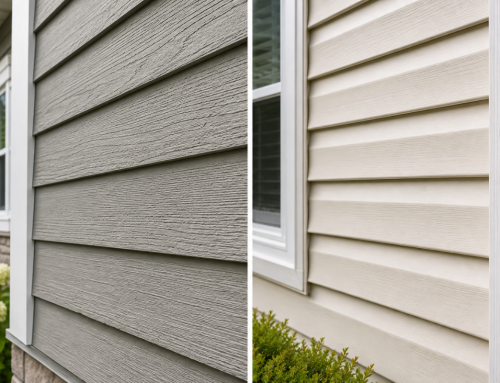
Our comparison of Hardie board vs. vinyl siding covers the differences.
Seal the Drafts Down Low
As warm air escapes through the top of the house, it pulls cold air in at the bottom. Sealing the attic helps, but the low gaps matter too.
- Weatherstripping: Replace worn strips on exterior doors and drafty windows. If you can see daylight around a closed door, cold air is getting through.
- Exterior caulking: Seal around window frames, door trim, dryer vents, hose bibs, and anywhere a pipe or cable enters the house. Do it before freeze-up, since most caulking doesn’t cure well in the cold.
- Rim joists: In the basement, check where the house framing sits on the foundation. In older homes this area is often bare or poorly sealed.
- Damaged siding and trim: Loose or missing pieces let wind push in behind the siding. They’re worth repairing before the worst of the winter wind arrives.
Check Manitoba’s Rebates and Financing First
Efficiency Manitoba offers rebates on insulation for attics, walls, and foundations, plus incentives for air sealing verified through an EnerGuide evaluation. Income-qualified households may qualify for free upgrades. Programs and amounts change, so confirm current offers and eligibility before any work starts.
Manitoba Hydro’s Home Energy Efficiency Loan can finance up to $12,500 in efficiency upgrades, with payments added to your Hydro bill. Each type of upgrade has its own limit and has to meet set standards, like R-50 for attics.
If the bigger project is a new roof or new siding, New Heights offers financing through Financeit. Our post on local roofing companies that finance covers the questions to ask before you sign.
Put These Best Energy Saving Tips to Work Before the Next Cold Snap
Start with the attic. It’s where most Winnipeg homes lose the most heat, and the snowfall and frost checks above will tell you a lot before you spend anything. The draft sealing can happen this weekend. Insulation and exterior upgrades are worth planning around any roof or siding work coming up, while those parts of the house are open.
If icicles, frost, or snow on your roof point to a roof near the end of its life, call New Heights Roofing & Siding or book a free on-site estimate. We’ll tell you what we find, including when the fix is insulation rather than a new roof.