
WHAT YOU’LL LEARN
Hardie board and vinyl siding both perform well in Winnipeg, but they’re built differently and excel in different situations. Hardie board offers greater durability and impact resistance, while vinyl siding remains one of the most affordable low-maintenance options available. The right choice depends on your budget, how long you plan to stay in your home, and what matters most to you.
In This Article:
If you’re comparing Hardie board vs vinyl siding, you’re probably already looking beyond colour samples and curb appeal. You’re trying to figure out which material will give you the best combination of durability, maintenance, appearance, and value.
After all, most siding products look great on installation day. The difference shows up five, ten, or even twenty years later after your home has endured Winnipeg’s winters, hailstorms, strong winds, and constant freeze-thaw cycles.
Both Hardie board and vinyl are solid options, but they aren’t built the same way, and one may suit your needs better than the other.
Hardie Board vs. Vinyl Siding in Winnipeg’s Climate
Winnipeg isn’t an easy place for exterior building materials. Temperatures can swing from below -30°C in winter to above +30°C in summer, forcing siding to expand, contract, and endure years of freeze-thaw cycles.
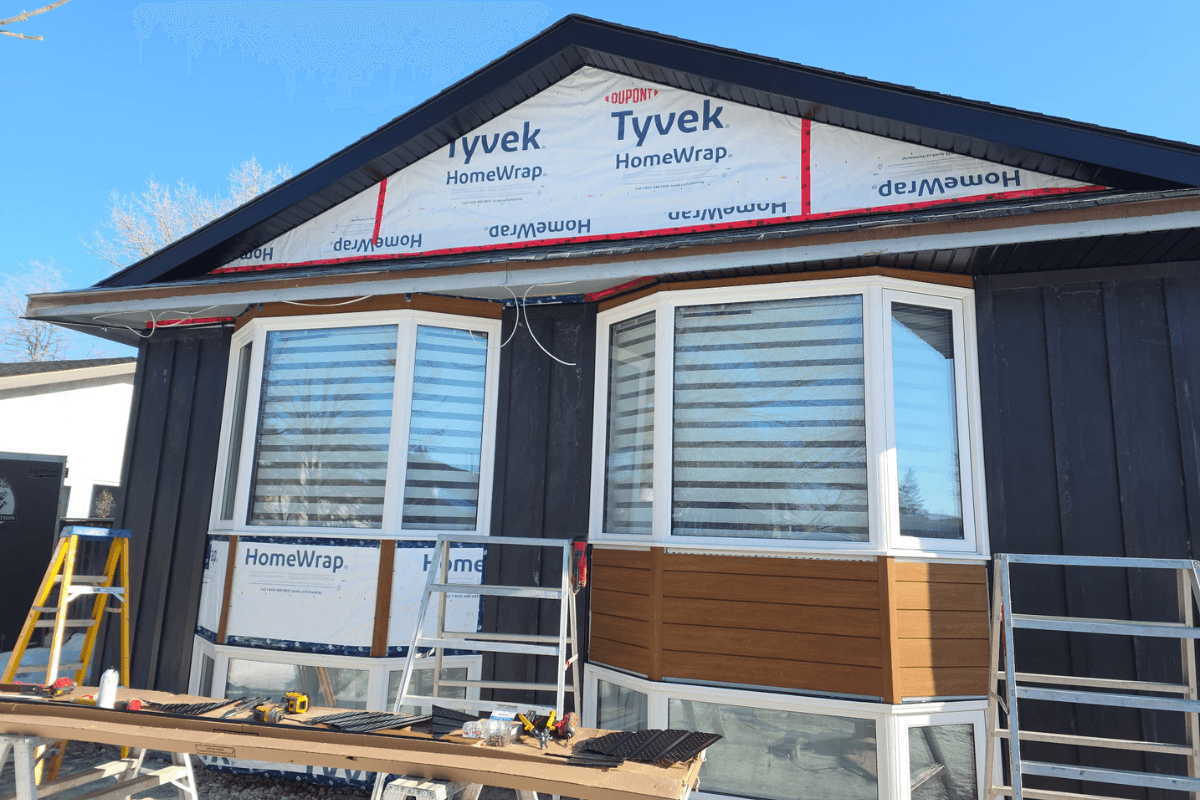
Vinyl siding is made from PVC. It’s lightweight, doesn’t rot, and requires very little maintenance. Modern vinyl products have improved significantly over older versions, with thicker panels, better colour retention, and profiles that resemble traditional wood siding.
Hardie board siding, often referred to as fibre cement siding, is made from cement, sand, and cellulose fibres. The finished product is considerably heavier and more rigid than vinyl, allowing it to resist movement as temperatures fluctuate throughout the year.
Neither option is likely to fail simply because you live in Manitoba. Both have proven themselves in cold climates. Where they begin to separate is after years of hailstorms, prairie winds, and seasonal temperature swings, when the materials respond differently to wear and impact.
Durability and Hail Resistance
If durability sits at the top of your priority list, Hardie board has a clear advantage. Fibre cement siding has a dense, solid surface that resists dents, cracks, and impact damage far better than vinyl. That’s especially valuable in Winnipeg, where hailstorms are a regular part of summer.
Vinyl siding performs well under normal conditions, but it can crack when struck by large hail or impacted by objects like ladders, lawn equipment, or flying debris during windstorms. Individual panels can certainly be replaced, but matching older siding after years of sun exposure isn’t always straightforward.
No siding is indestructible; large hail can damage almost any exterior product. Hardie board simply tolerates everyday abuse better, making it a popular choice for homeowners planning to stay in their home for many years.
Maintenance Requirements
This is where vinyl siding earns much of its popularity. Vinyl never needs painting, won’t peel, and generally only requires an occasional wash with a garden hose or pressure washer to remove dirt. For homeowners who want to install siding and largely forget about it, that’s a significant advantage.
Hardie board also requires relatively little maintenance, but it’s a painted product rather than a coloured material. Factory-applied finishes last a long time, often well over a decade, but they won’t last forever. Eventually, you’ll need to budget for repainting fibre cement siding to maintain its appearance.
That doesn’t make Hardie high-maintenance, just that you should expect painting to become part of your home’s long-term maintenance schedule.
Appearance and Curb Appeal
Both products have come a long way in the last decade. Modern vinyl siding is available in a wide range of colours, textures, and profiles. Higher-end products can convincingly mimic the look of wood, making them a substantial upgrade over the thin, shiny vinyl many people picture from older homes.
Hardie board has a different look altogether. Because the boards are thicker and more rigid, they create deeper shadow lines and sharper edges. Many homeowners prefer the more substantial appearance, particularly on newer custom homes or character homes where architectural detail matters.
Neither style is objectively better. Some homes look fantastic with quality vinyl siding, while others benefit from the cleaner, more defined appearance of fibre cement.
Cost and Long-Term Value
Budget naturally plays a role in any siding replacement. Vinyl siding costs less to purchase and install, making it one of the most economical exterior cladding options available. For homeowners replacing damaged siding after a storm or renovating within a fixed budget, that lower upfront cost can make a lot of sense.
Hardie board costs more for both materials and labour. The boards are heavier, require specialized cutting and fastening methods, and take longer to install properly.
That higher investment often pays off through greater durability, improved impact resistance, and strong curb appeal. Many homeowners view it as a long-term investment rather than simply an exterior finish.
Value comes down to your timeline more than the price tag. If you’re planning to move within a few years, quality vinyl siding may be the more practical decision. If you’re renovating your forever home, spending more upfront on Hardie board may prove worthwhile over the life of the house.
Which Siding Is Right for Your Winnipeg Home?
The age of your home, your neighbourhood, and your renovation goals all influence the decision. That’s why we don’t recommend the same product to every homeowner.
Vinyl siding is often the better fit if you:
- Want to keep your project within a tighter budget.
- Prefer the lowest possible maintenance requirements.
- Need an attractive, durable siding option without the higher upfront investment.
Hardie board is often worth considering if you:
- Plan to stay in your home for many years.
- Want maximum durability and impact resistance.
- Place a high value on curb appeal and long-term performance.
We’ll Help You Compare Both Options
Clearly, the Hardie board vs. vinyl siding debate doesn’t have a universal winner. Both products perform well in Winnipeg when they’re installed correctly.
New Heights Roofing & Exteriors installs both Hardie board and vinyl siding. Rather than steering you toward the more expensive option, we’ll explain the advantages, limitations, and costs of each so you can make an informed decision that’s comfortable for you.
A siding replacement is a long-term investment, and choosing the right material (and the right siding contractor) can save you money and maintenance down the road. If you’re comparing Hardie board vs. vinyl siding, we can help. Call (204) 809-8501 or fill out our contact form for a complimentary estimate. We’ll help you make a decision you can feel good about for years to come.